 Skip to content
Prostheses Billing Services
Credex Healthcare delivers prostheses medical billing and coding services tailored to the specific complexity of durable prosthetic device reimbursement. Whether your practice provides upper-limb prostheses under L-codes in the L6000 to L6599 range, lower-limb devices across L5000 to L5999, or prosthetic training and management services billed under CPT codes 97761 and 97763, our billing team understands the documentation standards, prior authorization requirements, and payer-specific coverage criteria that determine whether your claim pays on first submission or lands in a denial queue.
We manage your complete prostheses billing cycle so your clinical and fitting staff can stay focused on patients, not paperwork.





Features
Prostheses Billing Performance Built for High-Stakes Claims
98.6%
First-Pass Claim Acceptance Rate Across Prosthetic Payers
24-48 Hrs.
Claim Submission Turnaround After Documentation Sign-Off
900+
Insurance Payers, Including Medicare Advantage and Medicaid Plans
100%
Prior Authorization Tracking on All Prosthetic Device Orders
Our Story
Prostheses Billing Services You Can Rely On
At Credex Healthcare, every prosthesis claim goes through a structured four-point review before it reaches the payer. We confirm that the HCPCS L-code selected accurately reflects the device category, componentry level, and functional classification documented in the clinical record. We make sure that the Letter of Medical Necessity or Certificate of Medical Necessity includes the exact functional assessment language required by Medicare and other payers to support the device tier.
We double-check that the sending doctor’s paperwork explains the diagnosis, the functional limitation, and the clinical reason in sufficient detail for the payer to determine whether coverage is valid. We also make sure that any necessary previous clearance number is still valid, correctly linked to the device being paid for, and has not expired between approval and the filing of the claim. Before any code reaches the center, these four checks are performed on every claim.
Our prostheses billing services in the USA cover the following:
Claims Submission
We make prosthetic claims and send them online within 24 to 48 hours of receiving signed paperwork. We make sure that the correct HCPCS L-codes, CPT procedure codes, and ICD-10 diagnosis codes are used and match the clinical record before each transfer.
Payer Enrollment
We make sure that replacement providers and orthotists are approved by Medicare, Medicaid, and private insurers. We also handle DMEPOS supply-number standards and re-enrollment rounds so that billing does not stop.
Denial Management
Within 24 hours of rejection, every replacement claim receives a root-cause review. We appeal with supporting clinical evidence within the payment dates, whether the rejection is due to a lack of paperwork, a missing prior permission, or a disagreement over functional classification.
Coding & Documentation Review
Our qualified coding team verifies that the billed HCPCS L-codes and CPT codes correctly describe the prosthetic device and the services provided by reviewing orders for prosthetic devices, functional tests, physician scripts, and delivery confirmation records.
Prior Authorization
We handle prior-permission requests for all prosthetic devices that need pre-approval. To prevent high-value prosthetic claims from being denied after delivery, we keep track of approval timelines, end dates, and device-specific coverage criteria.
Revenue Cycle Management
We handle the entire process of getting paid for prostheses, from ensuring the patient's insurance is valid and documenting their functional rating to posting payments and collecting past-due accounts. You can always see all documented claims.
PROSTHESES BILLING COMPANY IN USA
Nationwide Prostheses Billing Services Coverage
At Credex Healthcare, our billing team is experienced in providing nationwide prostheses billing. We understand the unique billing requirements across different states in the country. Our team stays current with Medicare’s Durable Medical Equipment, Prosthetics, Orthotics, and Supplies coverage rules. These are administered regionally by four DME MACs, each of which publishes Local Coverage Determinations that define documentation and functional justification standards specific to its jurisdiction.
Credex Healthcare tracks prostheses billing rules by payer type, DME MAC jurisdiction, and state Medicaid program, so your claims are submitted with the right documentation and the right codes for every plan your patients carry.
Medicare & Medicare Advantage Billing
We follow CMS DMEPOS coverage rules and DME MAC jurisdiction-specific LCD requirements for prosthetic devices, applying correct functional classification documentation, supplier number requirements, and advance beneficiary notice protocols.
Medicaid Billing
We manage state-specific Medicaid prostheses billing requirements, including prior authorization mandates, fee schedule compliance, and documentation standards that vary significantly across state Medicaid programs and managed care carve-outs.
Commercial and Workers Compensation Billing
We handle prosthetic device billing for commercial payers, self-insured employer plans, and workers’ compensation carriers, applying plan-specific coverage criteria, in-network rate verification, and authorization requirements for each device class.
Veterans Affairs and TRICARE Billing
We bill prostheses claims for VA-authorized community care providers and TRICARE beneficiaries, managing program-specific documentation standards and prior authorization requirements for prosthetic devices under federal healthcare programs.
STATS
Prostheses Billing Achievements
Prostheses and DMEPOS Claims Processed
Average Clean Claim Submission After Document Receipt
First-Submission Prior Authorization Approval Rate
Average Denial Review and Appeal Preparation Turnaround
PROSTHESES BILLING SPECIALIST
End-to-End Prostheses Insurance Billing Services
Precise Documentation and Authorization Before Every Claim
There are five main reasons why prosthesis insurance billing often fails: functional reasoning paperwork that is missing or incomplete, HCPCS L-code mismatches, previous authorizations that have passed, no delivery proof, and DMEPOS provider number errors. Credex Healthcare has a structured review process that happens before a claim is submitted, which helps with these problems.
NPI & DMEPOS Supplier Verification
We verify that rendering providers hold active DMEPOS supplier numbers in the correct Medicare jurisdiction, and that NPI-to-TIN linkages are accurate across all payers before any prosthetic claim is submitted.
HCPCS L-Code Review (L5000–L5999, L6000–L6599)
Our coders confirm that the HCPCS L-code selected matches the prosthetic device category, componentry level, and functional classification documented in the prescription, evaluation, and delivery record.
Documentation and CMN Review
We review Certificates of Medical Necessity, physician prescriptions, functional assessment notes, and delivery confirmation records to ensure every prosthetic claim is supported by complete documentation before submission.
Prior Authorization Tracking
We manage authorization requests for all prosthetic devices requiring pre-approval, track expiration dates against expected delivery timelines, and initiate renewal requests in advance of any authorization window that is at risk of lapsing.
Payer LCD and Coverage Compliance
Our team applies DME MAC jurisdiction-specific LCD requirements, commercial payer coverage policies, and Medicaid program rules to every prosthetic claim, ensuring documentation meets the specific coverage criteria of the payer being billed.
AR Follow-Up
All open prostheses claims are tracked through a structured AR process segmented by payer and aging bucket, with escalation protocols for any high-value claim exceeding 45 days without payment or a formal payer determination.










Strategic Insight
Specialized Prostheses Billing Company in the USA
There are expensive, specialty-specific billing problems that prosthetic providers must deal with every day that can turn high-value claims into instant losses. These problems include not having enough functional classification documentation, prior authorizations that have expired, and missing delivery receipts. As a result, providers often have to deal with denials or demands for repayment of $12,000 to $40,000 per episode. Credex Healthcare fills these gaps before they turn into write-offs, protecting your income by making sure every claim is properly recorded, approved, and backed, so your practice gets paid for the life-changing care you provide.
Claims Submission
Before sending the prosthetic claim electronically to the payer, we make sure that it includes valid HCPCS L-codes, supported CPT treatment codes, complete ICD-10 illness coding, and confirmed delivery documents.
Coding & Documentation
Our prosthetic coding experts review every order, functional assessment, and delivery record to make sure that the billed L-codes match the actual device provided, and that the paperwork supports the stated functional classification.
Prior Authorization Management
We initiate, keep track of, and extend prior authorizations for all replacement devices that need them. We do this by comparing delivery dates with authorization windows and requesting extensions before any high-value authorizations expire.
Denial Management & Appeals
Within 24 hours, denied replacement claims are reviewed and put into groups. Our appeals team writes answers that are backed up by functional assessment records, medical notes, and gadget specs. These responses are sent to payers by filing due dates.
Credentialing & Enrollment
We handle re-enrollment cycles and add new locations to keep billing current and in line with DMEPOS provider membership, NPI registration, and customer credentialing for prosthetists and prosthesis centers.
Revenue Reporting & Analytics
Every month, practice leaders receive reports that show the clean claim rate, the number of denials broken down by L-code group and payer, the rate of prior authorization approvals, the amount of outstanding debt by device type, and net collections trends. This gives them a full picture of the revenue cycle.
12+
Prosthetic and DMEPOS Revenue Cycle Expertise
100%
DMEPOS Coverage for Active Provider Rosters
99%
HIPAA Compliance Rate Across All Billing Operations
Credex Healthcare, Leading Prostheses Billing Company
24/7 Support
Dedicated Billing Support for Prosthetic Providers
100%
Customized Billing Workflows for Prosthetic Practice Models
Specialties We are Offering
TESTIMONIAL
What Our Prostheses Clients Say About Us

CPO
David
“Medicare audits on our microprocessor knee claims were costing us tens of thousands of dollars in repayment demands because our K-level documentation was not specific enough. Credex reviewed our whole paperwork process and made a pre-delivery plan that covered all the issues the DME MAC had pointed out. Since then, we haven’t had a functional classification rejection, and our risk of being audited has gone down a lot.”

MD
Odlum
“We refer a high volume of patients for prosthetic fittings, and the coordination between our clinical documentation and the billing team has always been a weak link. Credex bridged that gap by creating a documentation template that our physicians use, which maps directly to what Medicare needs for L-code claims on the prosthetic side. It has made the referral-to-reimbursement process genuinely smoother for everyone.”

Revenue Cycle Director
Tanya
“Our in-house team couldn’t keep up with managing prior authorizations for four sites and eight business payers. Credex set up a system to track authorizations and send alerts when authorizations expire. Since the first quarter they took over, we have not lost a single prosthetic claim because of an outdated authorization.”

CO
Marcus
“It’s harder to get Medicaid to pay for limbs for kids than for adults, and most billing companies don’t know the difference. Credex knew exactly which L-codes need prior authorization under our state’s Medicaid managed care contracts, and how to appeal denials that say a 9-year-old really can’t do without a device. The number of denials we got went down from 19% to 4%.”

Practice Manager
Sandra
VA community care replacement billing has rules that most billing services aren’t set up to follow. When it comes to the Veterans Choice and MISSION Act frameworks, Credex knew how to get our claims approved quickly, which had never happened with our old billing system. They also knew what paperwork was needed for VA-authorized claims that weren’t needed by commercial payers. In three months, our AR days dropped from 78 to 31.
TIMELINE FOR Prostheses BILLING
How Our Prostheses Billing Process Works
Step 1
Provider and Payer Mix Assessment
Review of billing workflow, payer mix, denial history, and accounts receivable aging to identify revenue loss sources; focus on HCPCS L-code accuracy and documentation compliance.
Step 2
Credentialing and DMEPOS Enrollment
Verification of DMEPOS supplier status, NPI enrollment, and payer credentialing; initiate enrollment with Medicare, Medicaid, and commercial payers for gaps identified.
Step 3
Documentation and Authorization Workflow Setup
Establish documentation checkpoints for Certificate of Medical Necessity (CMN), functional classification, delivery confirmation, and authorization tracking; include expiration alerts to prevent claim loss.
Step 4
Clean Claim Submission
Review prosthetic claims for accuracy and completeness in HCPCS L-codes, CPT codes, ICD-10 specificity, and delivery documentation before electronic submission within 24-48 hours.
Step 5
Denial Management and Appeals
Review denied claims within 24 hours, prepare responses with clinical documentation, and submit appeals within payer deadlines to maximize recovery.
Step 6
Reporting and Ongoing Optimization
Provide monthly reports on clean claim rates, denial breakdowns, prior authorization approvals, and net collections; adjust billing workflows based on DME MAC updates and denial patterns.
Features
Every Practice’s Prostheses Revenue Cycle Management
Credex Healthcare offers the best Prostheses medical billing services in the USA. We boast an experienced team of professional billers and auditors to handle all your prosthetics claims. At PRG, we do the entire heavy lifting for your practices’ front end, essentially making your life easier from day one. We help you focus solely on your patients while taking care of your entire medical billing operations. Our experts offer you actionable support, leveraging decades of industry experience in medical billing services. With extensive billing experience and a versatile presence, our team ensures that all your accounts are handled, regardless of their source or size.
Prosthetic-Specific Billing Expertise
Our billing team stays up to date on HCPCS L-code classifications, DME MAC LCD requirements, functional classification paperwork standards, DMEPOS source compliance rules, and Medicare, Medicaid, and private payers' replacement coverage criteria.
Dedicated Account Management
You work with a named prosthetic billing account manager who understands your device mix, your payer contracts, and your documentation workflow. If a change to the DME MAC policy has an effect on your claims, your account manager will let you know before the change results in a rejection.
Transparent Monthly Reporting
Every client receives a detailed monthly report covering claim volume by L-code category, first-pass acceptance rate, denial breakdown by payer and root cause, prior authorization metrics, AR aging, and net collections with plain-language commentary on performance trends.
HIPAA-Compliant Operations
Credex Healthcare handles all its prostheses billing in a fully HIPAA-compliant setting that includes a secure EHR and practice management system interface, protected claim transfer, and access controls for all patient records and billing data, which are regularly audited.
GET STARTED
Prevent Prostheses Revenue Leak: Partner with Credex Healthcare
When replacement businesses don’t have an expert billing partner, they often lose money in three ways. When functional classification paperwork is incorrect, high-value claims exceeding $12,000 must undergo an audit and repayment. If proper payment procedures are established before a claim is submitted, these leaks can be avoided.
Credex Healthcare offers a free prostheses billing audit to qualifying providers. The audit covers your current HCPCS L-code accuracy across your highest-volume device categories, your denial rate by payer and root cause, your prior authorization tracking workflow, your DMEPOS supplier enrollment status, and your AR aging profile. There is no commitment required beyond the audit itself, and most prosthetic providers identify at least one significant, recoverable revenue gap during the first review session.
FAQs
Frequently Asked Questions
What services are included in prostheses medical billing?
Medical billing for prostheses includes all the paperwork and revenue cycle services needed to bill for artificial devices and related care services. For lower-limb prostheses (L5000 to L5999) and upper-limb prostheses (L6000 to L6599), you have to choose the right HCPCS L-codes. You must also choose the correct CPT codes for training (97761) and care (97763). As part of our core services, we also verify insurance, check source numbers and NPIs, handle prior authorizations, record Certificates of Medical Necessity, post payments, handle denials, and follow up on accounts outstanding.
What are the HCPCS L-codes in prosthetic billing?
It is possible to identify and bill for orthotics and prosthetics using HCPCS L-codes, which describe categories, patterns, parts, and functional groups. Lower-limb prosthetics are coded from L5000 to L5999, which cover basic prosthetic parts to full prosthetic feet. Upper-limb devices, which include different types of prosthetics, are grouped under L6000-L6599. Each code has its own coverage, payment rates, and standards for paperwork. If you bill incorrectly, you could face rejections or checks.
How can providers reduce claim denials in prostheses billing?
Reducing claim denials in prostheses billing necessitates tackling documentation and process flaws before claims reach payers. Reviewing the paperwork before sending it in is an important step to make sure that the HCPCS L-code matches the details of the device, that the Certificate of Medical Necessity matches the patient’s K-level classification, that the prior authorization is valid, that the beneficiary signs the delivery receipt, and that the doctor’s notes back up the diagnosis and the device’s use.
Is prior authorization required for prosthetic devices?
Prior authorization for prosthetic devices is different for each state, payer type, and type of device. In most cases, traditional Medicare doesn’t need it, but its services may cover some types of DMEPOS. Medicare Advantage often requires prior authorization, and Medicaid always needs pre-approval for expensive devices. Managed care organizations may add more requirements. Commercial payers have different needs depending on the type of plan and the company group, especially for high-cost devices.
articles
Our Latest Blogs

Key Takeaways AI and automation will become the norm in 2026, driven by healthcare practices’
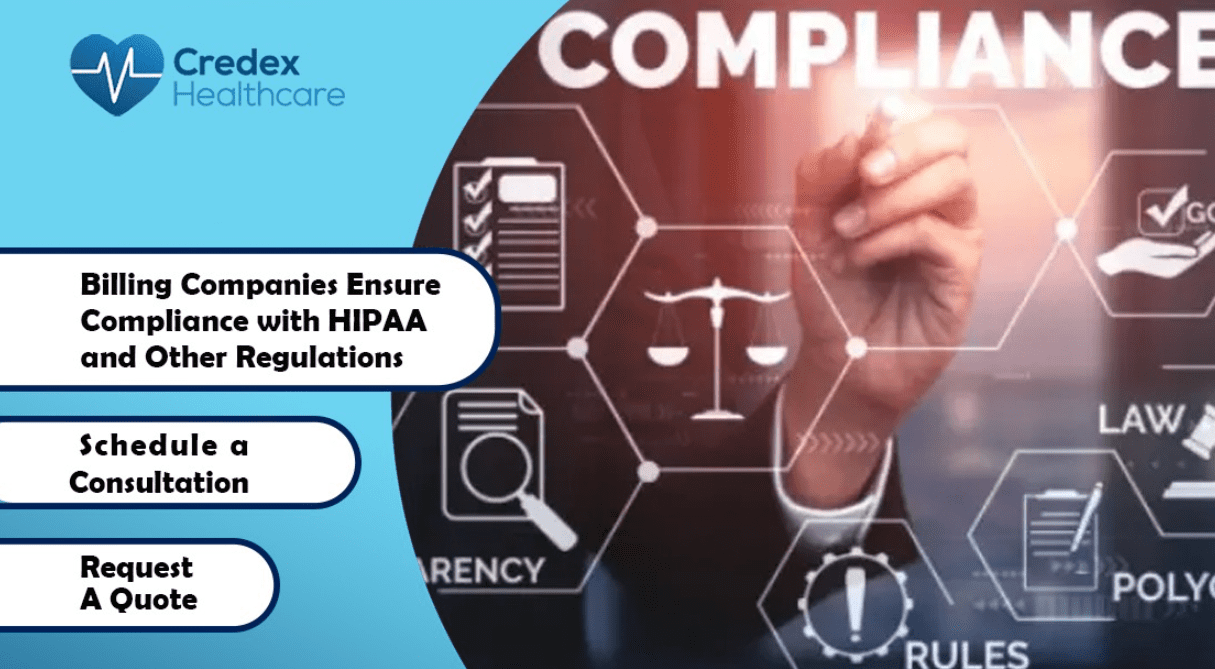
Billing companies ensure compliance with HIPAA and other regulations by being legitimate and reliable. Every
Key Takeaways PR 31 denial code is sent by insurance payers to inform the provider
Schedule A Call With Our Team Today
Fill the form and someone from our team will get back to you. Or you can also call us on (833) 477-1261.