 Skip to content
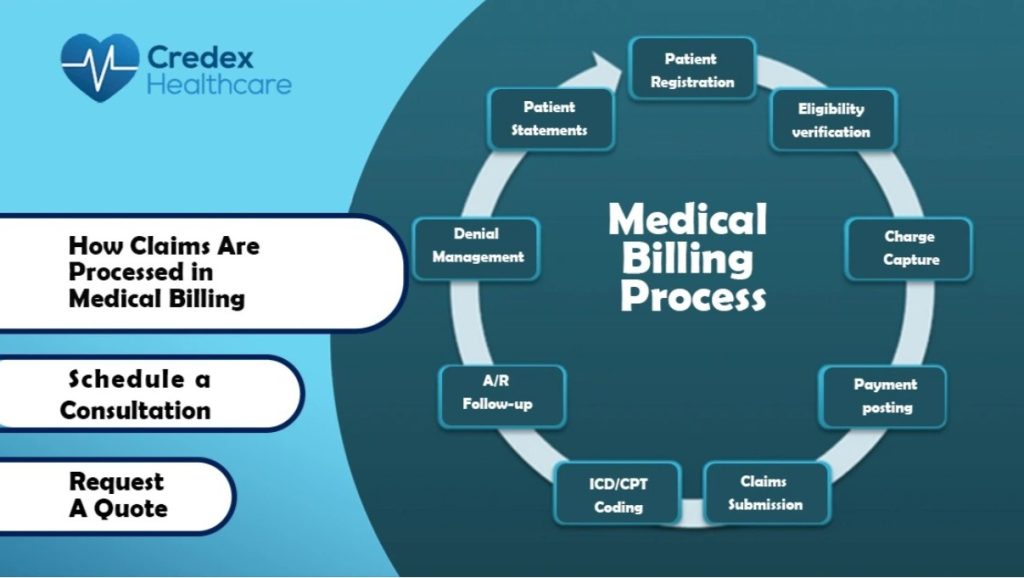
Understanding the medical billing process is essential for anyone working in healthcare, whether you’re a provider, a student entering the field, or an administrator trying to make sense of why payments take so long. At its core, medical billing is the communication system between healthcare providers and insurance companies. A claim is the formal request a provider submits to an insurance payer asking to be reimbursed for services delivered to a patient.
When that process runs correctly, providers get paid accurately and on time. When it breaks down through errors, missing information, or process gaps, claims get rejected or denied, payments get delayed, and revenue that should have arrived doesn’t. This guide walks through every step of the claims-processing cycle in plain terms, so you can understand exactly what happens from the moment a patient walks in to the moment a payment lands.
What is Claim in Medical Billing?
A medical claim is a formal billing document that a healthcare provider sends to an insurance company to ask for reimbursement for medical services rendered to a covered patient. It has a lot of information about the patient, the therapist, the services provided, and the evaluation that led to those services. You can consider it a detailed bill, but it goes to the insurance company first instead of the patient.
Claims fall into three broad categories based on how payers respond to them
Clean claim
A claim that is sent in with all necessary information properly filled out, along with the correct code and all required paperwork. Clean claims go through the process without any problems and are usually paid within 14 to 30 days of submission.
Rejected claim
A claim that is sent back before it reaches the payer’s review system due to technical issues. Rejection at the clearinghouse or payer entry level means the claim was never actually looked at by a judge. Claims that were turned down can usually be corrected and sent again.
Denied claim
A claim that went through the payer’s review method, was adjudicated, and was later ruled out ineligible for payment under the payer’s rules. There are many reasons for denial, such as services not covered, expired authorization, disagreements over medical necessity, and problems with coordinating benefits. If a claim is denied, it needs to be appealed or resubmitted with changes.
Step-by-Step Medical Billing Process
Patient Registration and Data Collection
The medical billing process begins before the patient ever sees a clinician. When a patient makes an appointment, the front desk staff collects their full legal name, date of birth, address, phone number, and insurance information and verifies for accuracy. It may seem like a simple step, but it’s actually one of the most important ones in the whole payment cycle.
A claim can be denied at the filing stage if there is a single figure in the patient’s date of birth that is the wrong way around, if the name doesn’t match the insurance record exactly, or if the insurance ID number is incorrect. With a detailed screening process, these mistakes can be avoided at all costs and finding them at registration is much faster than fixing them after a claim is turned down weeks later.
Insurance Verification
Before the appointment takes place, the billing team verifies the patient’s insurance eligibility. This means confirming that coverage is active on the date of service, identifying what the patient’s plan covers and what it excludes, checking deductible and copay status, and flagging any services that require prior authorization.
The most common and frustrating way for medical billing to lose money is to provide a service, send in a claim, and then receive a denial three weeks later because the patient’s insurance had expired or an authorization was needed for the service that was never obtained. This step of verifying the insurance stops this from happening. That whole situation can be avoided with a five-minute qualifying check before the meeting.
Medical Coding
After the patient visit is documented by the clinical provider, a medical coder translates that documentation into standardized codes used universally across the billing system.
Current Procedural Terminology (CPT) codes describe the specific service or treatment performed, like an office visit, a lab test, surgery, or therapy. Each code is for a different type of service, and the time or difficulty factors that tell you which code is correct are often included.
The International Classification of Diseases, 10th Revision (ICD-10) codes show what illness or disease the service was for. The diagnosis code helps payers determine if the service being paid was medically necessary for that disease. If a CPT code and an ICD-10 code don’t make sense together, the claim will be denied, even if both codes are right on their own.
Claim Creation
Once coding is complete, the billing team creates the actual claim document. Most practices work from a superbill, an encounter form completed by the clinical provider at the time of the visit that lists the services performed, the relevant diagnosis codes, and any modifiers or special billing circumstances.
The billing team uses the superbill to build the claim in the practice management system. The claim includes all relevant codes, provider NPIs, service dates, and details about the patient and their insurance. Then, this document goes through a claim-cleaning process, which can be done by hand or by computer, and looks for common mistakes before it is sent.
Claim Submission
Claims are submitted to payers either electronically through a clearinghouse or, in some cases, on paper. Electronic submission through a clearinghouse is the standard for most payers and most billing operations. The clearinghouse acts as an intermediary, reformats the claim to meet each payer’s specific electronic requirements, and performs an initial validation check before forwarding it.
Most of the time, electronic claims reach the recipient 24 hours after they are sent. Some smaller or specialty payers still need paper claims. They take longer to handle and have a higher mistake rate because the payer must enter the information by hand. For most practices, a simple way to shorten payment rounds is to send more claims electronically and fewer claims on paper.
Payer Adjudication
Adjudication is the process through which the medical insurance company reviews the submitted claim and determines what, if anything, it will pay. The payer’s system compares the claim to the patient’s coverage, makes sure the service was medically necessary based on the diagnosis, and, if needed, checks whether the provider is licensed and in-network.
Any deductibles, copays, or coinsurance are then applied to the final amount that can be reimbursed. Most major payers automate this process, which is why clean claims have the correct code and all the necessary paperwork go through processing faster than claims that need to be reviewed manually.
Payment Posting
The billing team posts the payment to the patient’s account and service date when the buyer sends payment. The billing team shouldn’t just accept the smaller payment if the buyer paid less than the agreed-upon rate for a service.
Systematic underpayment by a payer means that claims are regularly paid below contract rates. Any amount still owed after the payer’s payment is posted is sent to the customer as a bill showing their copay, deductible, or share of the duty.
Denial Management
Claims that are denied need an organized way to respond. The billing team looks at the payer’s explanation of benefits or remittance advice, finds the denial reason code, and decides on next steps, such as a corrected resubmission, a formal appeal with supporting documentation, or a secondary payer claim if the patient has more than one type of insurance.
Time is very important in denial management because payers have appeal deadlines that are usually 30 to 180 days from the date of the rejection, but can be longer or shorter based on the carrier. In addition to fixing individual denials, good denial management involves keeping an eye on patterns of denials across payers, reason codes, and procedure types to find systemic issues.
Common Challenges in Claim Processing
Data Entry Errors
An excessive number of claim denials is caused by mistakes made when entering data during registration and coding. A patient’s name written differently on their insurance card, an incorrect date of birth, or an incorrect NPI number on the claim will cause the claim to be rejected, which will delay payment and take time for staff to fix and resend it.
Missing or Incomplete Information
The main reason claims are sent back before they are decided is because of missing or incomplete information. A missing qualifier, an unsigned authorization, a previous authorization number not linked to the claim, or a reference provider NPI not included will cause the claim to be rejected at the clearinghouse or payer processing step.
Coding Errors
Coding mistakes include choosing a CPT code that doesn’t accurately describe the service recorded or pairing a diagnosis code with a treatment that doesn’t make sense. Both lead to rejections, but they can be avoided with qualified coders who stay up to date on code changes and the specific coding needs of each payer.
Timely Filing Violations
Late filings can be avoided at all costs and result in a loss of income. If a payer misses the filing limit, the claim can’t be paid or challenged. This type of loss can be completely avoided by tracking submission windows for each current user and integrating submission timelines into the billing process.
Tips to Improve Claim Acceptance Rate
Accurate Data Entry
Invest in accurate data entry at the front end. Front-desk protocols should require verification of insurance information at every visit, not just at initial registration. Catch coverage changes, address updates, and lapsed plans before they produce denials.
Proper Coding
Use certified coders familiar with your specialty. A coder who understands the specific CPT coding structure for your specialty, the diagnosis codes most commonly paired with your service types, and the documentation requirements your payers apply catches errors that a generalist misses.
Timely Submission
Within 24 to 48 hours of service, you must send in your claim. Submission delays make the entire payment cycle last longer and increase the risk of not paying on time. Submitting same-day or next-day claims into the billing workflow as a standard reduces the likelihood of filing deadline issues.
Denial Management
Track and analyze denial patterns monthly. A denial that occurs once is a billing error. A denial that occurs twenty times across the same procedure code is a process problem. Monthly denial analysis that categorizes rejections by reason code, payer, and procedure type identifies the systemic issues that consistent claim corrections can’t resolve on their own.
Follow Up
If you send a claim and don’t hear back from the provider within the regular working time, which is usually 14 to 30 days for electronic submissions, you need to follow up on it. Structured, scheduled follow-up on all open claims is an operational discipline.
Conclusion
The medical billing process is a multi-step cycle in which accuracy, timeliness, and follow-through at each stage are required to determine whether a provider is paid in full, in part, or not at all for care already delivered. From registering a patient to handling denials, each step either moves us closer to a clean claim and on-time payment or creates a gap that slows or eliminates income.
Experts in billing, providers, and management can figure out where problems are happening in the system and how to fix them by understanding how claims are handled. Understanding this is the first step for practices that want to increase collection rates, reduce rejections, and shorten payment processing times. Hiring professional billing support is often the fastest way to get it up and running.
