Skip to content
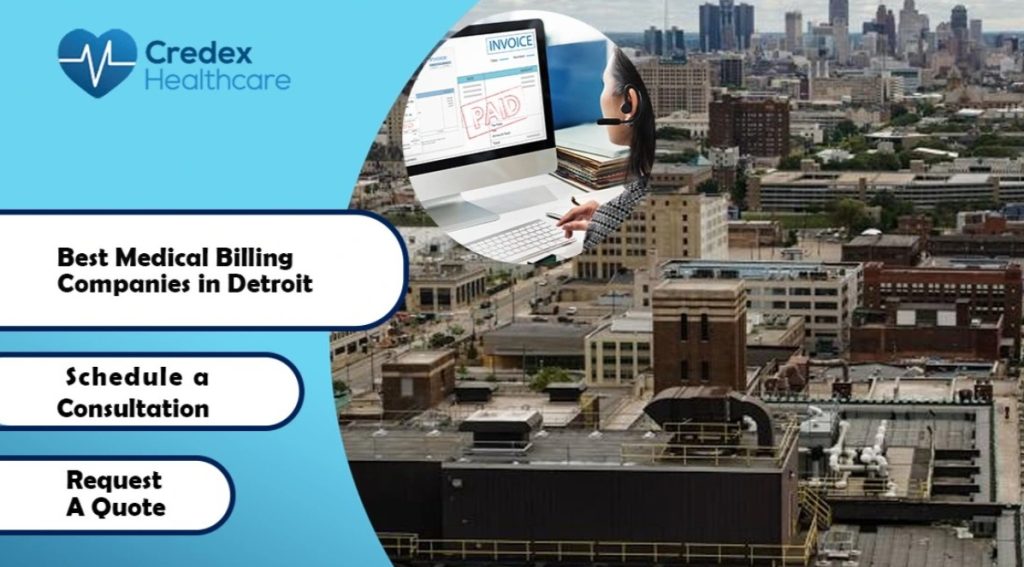
If you run a medical practice in Detroit, you know how quickly billing problems can drain your revenue. There are claims that aren’t paid for 60 days, refunds that are rejected and no one follows up on, and staff who spend more time calling insurance companies than seeing patients. These are not small problems. There was a study by the Medical Group Management Association that showed healthcare companies lose up to 15% of their annual income because of bad billing.
The healthcare system in Michigan makes things even more complicated. CareFirst BlueCross BlueShield, Priority Health, HAP, and Blue Cross Blue Shield of Michigan are the main insurance companies in the state. Each has its own rules about how to submit claims, how to challenge, and when to get paid. The Medical Practice Act in Michigan has specific rules that must be followed when doing bills. This means that you need real people to help you, not just general software.
This is why it’s important to pick the right medical billing partner. It’s not enough to just find a company that knows how to deal with Michigan’s payers, understands the links between Detroit’s health systems, and can handle the state’s legal standards. Choosing the wrong partner will cost you a lot of money in lost debt collection chances and handling delays.
What Makes Detroit Medical Billing Different
Most national billing companies treat Detroit like any other city. They use models that were made for businesses in the suburbs of Texas or Florida. They don’t get that you might be certifying with Henry Ford Health or one of the other hospital systems that DMC runs. They don’t know that Michigan has different insurance rules from the federal government. They can’t use their connections with customers in the area to their advantage as a local company can.
One of the benefits of working with a billing business that knows the Detroit market is that it will help your bottom line. They can handle claims faster because they work directly with local provider offices. They know which challenges work with Michigan insurance companies, so they can handle denials better. They can be sure they are following the rules because someone on their team knows both federal and Michigan healthcare law.
It’s not always the case that the biggest or cheapest billing partner in the country is also the best for Detroit businesses. They know a lot about this market better than anyone else. They know that Michigan practices have special problems, like having to compete with bigger health systems for insurers’ attention, dealing with various DMC hospital locations, and figuring out CareFirst’s sometimes hard-to-understand claims processes. Every time, a partner who understands these details will do a better job than a general national provider.
Top Medical Billing Companies for Detroit Practices
Credex Healthcare
Credex Healthcare has been handling the income cycle for healthcare companies all over the US for more than ten years. They are especially adept at what they do in Michigan and the Great Lakes area. What makes Credex stand out in the Detroit market is that they focus on certain types of providers, like orthopedic surgery, infant offices, mental health and psychology, and medical licensing. It’s not like they want to please everyone.
For businesses in Detroit, Credex can help with CareFirst BlueCross, Priority Health, and other Michigan-only suppliers. Their team knows what the Michigan Medical Practice Act says, how to get credentialed in the state, and the rules that national doctors run into. They’ve made methods for handling cases that take into account how the insurance market works in Michigan. They know which ways of coding work best with Michigan payers and which ones cause claims to be denied for no reason.
Credex works best for subspecialty groups that need experts in their own field, like orthopedics, pediatrics, psychology, and surgery. They are in charge of the whole income cycle, from making sure the insurance is valid to submitting claims, dealing with denials, and paying patients. Their prices are usually based on a portion of the collection (4-6%), which means that they have an interest in the success of your business. They’re especially good at handling denials, and they’ve been able to get claims that other companies had written off paid.
The Detroit Advantage: Credex has licensing agreements with some of Michigan’s largest health systems and knows how to negotiate with payers in this market. They’ve worked with a lot of practices in Detroit and know how all of Michigan’s payers work.
MyOutDesk
MyOutDesk markets itself to routine and medical billing tasks. They use a mixed model where your billing staff works online as part of your business. However, they hire, train, and control the staff. This method works well if you want to keep direct control over the billing process while cutting down on the costs of hiring and managing people.
MyOutDesk takes care of hiring a billing expert so you don’t have to. You get a committed person or team, but MyOutDesk runs their business. The good thing is that you don’t have to deal with hiring people or managing them. The downside is that economies of scale are restricted, and there is less access to specific knowledge. Prices are usually set per person per month and range from $1,500 to $3,500, based on how much experience the person has.
MyOutDesk works best for practices with 10 to 30 providers that want to hire and handle outside help but keep payments in-house. They aren’t as good at specializing or getting paid as well as medical billing companies that only do that.
P3 Healthcare Solutions
P3 Healthcare Solutions helps mid-sized and specialty offices with all of their medical billing, coding, and licensing needs. As part of their service approach, they handle cases, denials, help with credentials, and patient bills. They advertise themselves as a full-service RCM company, but they don’t really specialize in any one area.
P3 works best for companies that want full billing services but don’t want to become very specialized. They are good at the details of bills, but they don’t know a lot about the Michigan market. Their prices are usually made up of a fee for each claim plus a monthly service fee of $200 to $500 plus two to three percent of the claims handled.
If you need a wide range of services for your Detroit business, P3 is a good professional option. They can grow faster than small local providers, but they aren’t as skilled as Credex or other smaller companies.
GroupOne
One of the things that GroupOne does is both run medical practices and handle bills. They focus on group activities and can connect to EHR systems from top to bottom. As part of their service, they handle the whole income cycle and offer business advice and licensing. They are set up for bigger medical groups that want to combine their billing and business management.
As a practice management consulting firm, GroupOne is better at what it does than when it comes to specific bills. Their price is made up of management fees and revenue-based parts that usually range from $5,000 to $15,000 a month, depending on the size of the business.
GroupOne might work for medium-sized to big Detroit groups that need both billing and practice management services. They aren’t as good for businesses that focus on one area of medicine and need specific billing knowledge.
Integra Global Solutions
Integra Global Solutions offers medical billing and RCM services with a focus on mid-market practices. They help with licensing, handling claims, and dealing with denials. Their plan usually includes assigning a billing team to your business. This way, you can be sure that your account will be handled the same way every time.
Integra is particularly adept at basic billing tasks, but it doesn’t know much about how the Michigan market works or about certain types of providers. Usually, they charge by the claim or a mix of a monthly base fee and claims fees. Their prices range from $300 to $800 a month plus 1.5% to 2.5% of claims.
HamlyBusiness Solutions
Medical billing is one of the practice management services that Hamly Business Solutions excels in. They focus on solo practitioners and groups that are small to medium-sized. Their service is more of an administrative one; they handle things like filing claims and paying without giving a lot of advice or coaching.
Hamly works well for solo practitioners and very small groups (2–5 providers) that need simple help with bills. They are cheap for small businesses, but they don’t provide as much service or market knowledge as bigger billing partners. Prices are usually very low, between $150 and $400 a month, plus small fees for each claim.
Transcure
Transcure markets itself as a full-service medical paperwork and billing company by providing writing and billing services. Their plan is based on correctly recording health information and turning it into claims that can be billed. They take care of both the paperwork and payment, which can be helpful for businesses that need a lot of writing.
Detroit Medical Billing Providers: Comparison Table
| Provider | Pricing Model | Processing Time | Denial Mgmt | Michigan Expertise | Technology | Best For |
| Credex Healthcare | 4-6% of collections | 24-48 hours | Specialized, proactive | Strong regional focus | Advanced integration | Specialty practices |
| MyOutDesk | $1,500-3,500/month | Varies | Limited | Minimal | Standard | Mid-size (10-30 providers) |
| P3 Healthcare Solutions | $200-500 + 2-3% | 48-72 hours | Standard | Limited | Good | Mid-market generalist |
| GroupOne | $5,000-15,000/month | 48 hours | Standard | Limited | Integrated EHR | Large groups |
| Integra Global Solutions | $300-800 + 1.5-2.5% | 48-72 hours | Standard | Limited | Good | Mid-market solid choice |
| Hamly Business Solutions | $150-400/month | 72+ hours | Basic | Minimal | Basic | Solo practitioners |
| Transcure | Hybrid (docs + billing) | Variable | Limited | Minimal | Standard | Transcription + billing |
What to Look for in a Detroit Medical Billing Partner
Michigan Compliance and Regulatory Knowledge
Michigan has its own rules about health care that are different from federal rules. The state has its own Medical Practice Act, specific rules for insurance under the Insurance Article, and its own rules for getting credentials. It’s not enough to have a billing partner who knows Michigan law. It’s necessary to avoid problems with regulations. The right partner has staff that knows the licensing rules in Michigan, the rules for certain payers, especially CareFirst’s rules, and the different ways that states handle credentialing.
Technology and System Integration
Your payment partner should be able to work with your EHR system without any problems. Your billing software needs to be able to talk to your practice management system, no matter what platform you use (Epic, Athena, NextGen, eClinicalWorks, etc.). Systems that are broken up or require a lot of human data entry slow things down. The best partners let you track claims in real time, connect them to your EHR, and automatically check your status.
Local Market Understanding
This is what makes a good billing partner in Detroit different from a typical national company. Experience dealing with Henry Ford Health System doctors, knowledge of DMC licensing processes, and connections with Blue Cross Blue Shield of Michigan are some of the things that make this job stand out. These links are important. A partner with a presence in Michigan knows the unwritten rules of how to bill people there.
Denial Management and Revenue Recovery
There will always be denials. A reliable payment partner does more than just handle claims. They actively handle rejections and try to get back the moneyoney they lost. You should get clear information about your rejection rate, the reasons for it, and plans for how to lower it. A strong partner will keep going after appeals, change how they bill to stop routine rejections, and get back claims that other firms might just throw away.
Frequently Asked Questions
What makes medical billing in Michigan different from other states?
CareFirst BlueCross BlueShield controls a large part of the insurance business in Michigan. This company follows different rules than national payers. The state also has its own requirements for the Medical Practice Act and its own ways of approving credentials that are different from federal rules. A billing partner needs to know how these things work in Michigan in order to do their job well.
How do billing companies handle the complexity of multiple Michigan payers?
The best partners have long-term ties with big Michigan payers and know exactly what they need. They change how they bill based on what each buyer wants, which cuts down on rejections and speeds up the process. Standard national methods don’t always work well with the way Michigan’s payers work.
What’s the average claim processing time in Michigan?
Claims are usually processed and sent by competent billing companies within 24 to 48 hours of receipt. If you send in your claim properly, Michigan claims usually get paid within 25 to 35 days. Most of the time, longer processes are caused by billing problems rather than slow payers.
Are medical billing services more expensive in Detroit than other markets?
Prices tend to stay pretty much the same across markets, though they can change a bit depending on the company and the amount of service. Most of the time, the local knowledge is extra small and well worth it because local partners handle cases more quickly and get rid of more rejections. Most of the time, the extra will be paid back by faster cash flow and fewer write-offs.
How do I know if I should switch from my current billing provider?
Claims handling that takes more than 5 to 7 working days, rejection rates above 8 to 10 percent, slow responses to your questions about the state of your claim, or a lack of useful information about your cash flow are all red flags. If you have more than one danger sign, you might want to think about making a change.
Conclusion
When picking a billing partner, don’t base your choice only on price or name across the country. The healthcare market in Detroit works in a certain way that requires certain skills. A partner that knows Michigan payers, understands state compliance rules, and works with Detroit health systems will do a lot more for your business than a general national provider. With the right partner, you can keep your income safe and let your team do what they do best, which is taking care of patients.
First, ask your top two or three prospects for more information. Ask how long they’ve been in business in Michigan, how they handle denials, and how long it usually takes to pay claims. Ask for recommendations from businesses that are like yours. Most importantly, ask if they are ready to do a test project with your claims and patients so you can see how well they work in real life.
Getting bills right is important for the financial health of your medical business. Finding the right partner doesn’t have to cost a lot. They’re an investment in the success of your business and the well-being of your team. Take the time to find a partner who has both the right skills and understanding of the area.