Skip to content



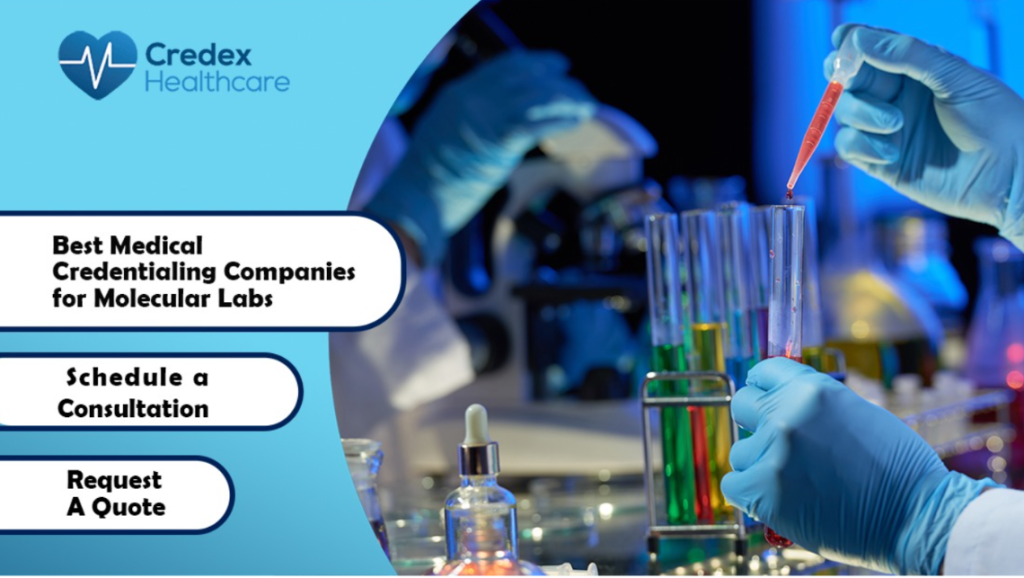
Molecular diagnostic labs are crucial in modern medicine because they use genetic testing, pathology work, and precision medicine diagnostics to help doctors make better treatment decisions. However, many of these labs have trouble getting licenses, which should be a fairly simple process. This shows that there is a gap even though they have advanced clinical skills. It is getting harder to optimize revenue, especially for claims for genetic testing, which commercial payers carefully look at and want proof of medical need and cost-effectiveness.
The difficulty is increased by extra-legal compliance standards set by the Clinical Laboratory Improvement Amendments (CLIA). Partnering with a competent credentialing company is particularly vital for a lab’s commercial performance since it may speed up or slow down the process of registering customers and collecting payments. Read about the best medical credentialing companies for molecular laboratories and choose the one that meets your customized requirements.
What is Molecular Lab Credentialing?
Molecular lab credentialing is a comprehensive registration process enabling diagnostic labs to bill insurance for services like molecular pathology and genetic tests. It includes proving lab capabilities and compliance with regulations. Key steps are obtaining CMS’ CLIA approval, accomplishing state lab credentialing, and completing payer-specific registration forms.
Provider credentialing looks at each healthcare provider’s qualifications and training, while lab credentialing looks at the facility’s compliance, machine configurations, quality control, and technical accuracy. It usually takes 120 to 180 days for lab credentialing, while it only takes 90 to 120 days for provider credentialing.
Why Molecular Labs Need Specialized Credentialing Companies
- CLIA Requirements:
The Clinical Laboratory Improvement Amendments (CLIA) set strict rules for molecular labs that cover matters such as quality control, proficiency testing, staff qualifications, and documentation of equipment calibration. Incomplete applications can cause delays, but credentialing companies that specialize in this area know what CLIA documents and technical presentations are needed for insurers.
- High-Risk Payer Scrutiny
Insurance companies are paying more attention to molecular diagnostic testing because the costs are going up. They do this by putting strict compliance standards in place for how tests can be used. Genetic tests need proof that they are medically necessary with a lot of paperwork. Molecular lab applications need even more reviews that require detailed methods and quality metrics.
- Specialized CPT and Molecular Codes
There are specialized and dynamic CPT codes in the field of molecular diagnostics. Occasionally, these codes are “stacked” for tests that are challenging to understand. High-cost molecular codes often need to be approved ahead of time. General credentialing services may struggle with accurate code applications, which could result in denials. In contrast, specialized credentialing firms keep up with codes and payer policies to help applications go through.
Key Factors to Consider When Choosing a Credentialing Company
- Lab Experience
Prioritize companies with extensive experience in genetic diagnostic labs. Inquire about the number of certified molecular labs, expertise in various testing areas (pharmacogenomics, cancer, genetic disease, infectious disease), and their transactions with lab-focused payers.
- Turnaround Time
Assess the time taken by molecular labs to authorize tests, which directly impacts cash flow. Evaluate their regular completion times, capability to expedite urgent requests, and consistency in meeting estimates. Efficient credentialing companies minimize delays caused by paperwork issues.
- Payer Ties
Strong connections with major payers are crucial for navigating scrutiny and expediting processes. Companies with established relationships can handle applications and technical questions more swiftly. Investigate their experiences with major molecular test payers such as Aetna, Cigna, Blue Cross Blue Shield, Medicare, Medicaid, and UnitedHealthcare.
- Compliance Expertise
Credentialing partners must possess comprehensive knowledge of compliance requirements from CMS, state health offices, and organizations like CAP or CLIA. Look for companies that understand CLIA skill testing, quality control documentation, staff qualifications, and presenting technical compliance effectively to non-technical insurance reviewers.
Best Medical Credentialing Companies for Molecular Labs
Following are the top medcial credentialing companies for molecular labs:
Credex Healthcare
Credex Healthcare has established itself as a premier medical credentialing company serving specialty practices and diagnostic laboratories across the United States. Their comprehensive understanding of laboratory credentialing makes them particularly valuable for molecular diagnostic labs navigating complex payer enrollment processes. Based in Florida with nationwide reach, Credex brings specialized expertise in CLIA compliance, laboratory credentialing, and payer-specific requirements that molecular testing facilities face.
Services Offered
Credex helps labs get all the credentials they need. This includes helping with CLIA certification and state laboratory licenses, as well as enrolling in Medicare and Medicaid through PECOS and state systems. They also help with commercial payer credentialing with all major insurance companies, manage CAQH profiles for lab directors, keep an eye on compliance, manage recredentialing, and prepare technical documents that explain complex molecular methods to payers.
Why It’s Best for Molecular Labs
Credex gives each lab its own credentialing expert. This ensures that someone who understands your lab’s unique molecular testing skills handles all payer applications. Their team has extensive expertise in molecular CPT coding. They can also clearly demonstrate to insurance companies why genetic testing is therapeutically valuable. They also handle prior authorization, which is another complex requirement for molecular labs to successfully join insurance panels.
Key Strengths
- Personalized service model with specialists who focus on this process,
- Deep knowledge of CLIA and regulatory compliance,
- Established relationships with major payers,
- Proven success with specialty labs including molecular diagnostics,
- Full support, from initial enrollment through ongoing recredentialing,
- Ability to handle laboratory operations in multiple states, and
- Skill in explaining complex testing methods in clear business language that meets payer standards.
MedCare MSO
MedCare MSO has been providing credentialing and registration services across the country since 2012, with a 95% success rate. They have done rigorous facility certification for specialty offices, imaging centers, and labs. MedCare MSO does preventative credentialing and tracking for molecular labs so that credentials never lapse and billing for diagnostic services is never interrupted.
They do initial certification, ongoing tracking, revalidation management, and premium network registration. This helps genetic labs get more payers to work with them.
AltMED
AltuMED offers high-quality certification services that help with the management of the healthcare system, including work done in clinical laboratories. Molecular labs can focus on uninterrupted diagnostic tests instead of tedious paperwork thanks to their all-around help. AltuMED does the whole credentialing process, from gathering paperwork to getting insurance approval.
They also do provider verification, compliance checks, and quality assurance all the time. For molecular labs, AltuMED knows a lot about the credentials that are needed in each lab and the special paperwork that diagnostic facilities need to fill out when they sign up for private payers and government programs.
Medwave

Medwave is based in Cranberry Township, Pennsylvania. They have built up specialized knowledge working with diagnostic laboratories, including genetic testing labs and molecular diagnostic facilities. Their team knows all about lab billing, including specialized coding and ever-changing standard compliance.
Medwave processes all the medical credentialing for labs, including setting up CAQH, signing up for NPI, and helping with recredentialing. Molecular labs can use Medwave to quickly and easily get lab-specific payers’ credentialing help from knowledgeable pros.
DoctorPapers
DoctorPapers is a company under TechMatter that offers complete solutions to help healthcare offices and labs run their businesses more efficiently, get paid more quickly, and stay current with rules and regulations. They also help labs identify their physicians and manage Medicare, Medicaid, and private patient enrollments for testing centers.
DoctorPapers takes care of new provider enrollments and re-credentialing with insurance networks. They handle the paperwork, follow-ups, and schedules so that lab heads can focus on testing operations instead of having to worry about paperwork. Their professional credentialing services ensure that all providers are enrolled without any issues.
Transcure

Transcure understands complicated billing, including for lab services. They have over 1,100 qualified billers and coders and retain 99% of their customers after serving over 500 providers. Transcure provides credentialing and lab billing support to molecular diagnostic labs because correct pricing and proper authorization go hand in hand.
They effectively handle Medicare and Medicaid revalidations, oversee CAQH accounts for lab professionals, and offer help around the clock to labs that need to be open longer or have urgent testing plans. Because they are billing experts in a lot of different areas, they know all about genetic diagnostic coding and the related matters in getting reimbursements.
TrueCare RCM
TrueCare RCM offers medical billing, coding, and provider credentialing for doctors. These services are meant to boost income and make income cycle management systems stronger. Their complete provider registration and credentialing options cater to Medicare, Medicaid, and private users. This feature helps labs get into insurance networks more quickly.
TrueCare RCM provides CLIA registration services to help with lab approvals and testing methods for molecular labs. Their committed credentialing experts know how healthcare compliance works. They manage state license tracking and DEA certificates, as well as regulatory compliance for labs. The TrueCare team makes sure that facilities are always ready for inspections.
PPS (Physician Practice Specialists)

PPS has given credentials to more than 50,000 workers in all 50 states since 2008, giving them unique experience in lab credentialing. Former practice executives lead PPS, which knows the practical pressures molecular labs face when they set up new sites or grow their test lines.
Their qualified accreditation specialists know all about the different requirements for labs, like CLIA certification, state credentialing, and complicated payment registration. PPS gives useful starting advice for newly established molecular diagnostic labs. They help with choosing payers, making agreements, and setting up operations in addition to basic credentialing services.
Credentialing Process for Molecular Labs (Step-by-Step)
Step 1: CLIA Certification
Before any payer credentialing can start, molecular labs need to get CLIA certification from CMS. Applications entail identifying the professionals who administer the tests, quality control methods, how skill testing works, and equipment specs. It usually takes 60 to 90 days for CLIA approval.
Step 2: State Laboratory Credentialing
CLIA approval is not enough in most states; they also need their own lab licenses. Requirements are different from state to state. Some states need on-site checks, staff interviews, and a lot of paperwork. It can take anywhere from 30 to 120 days to get a state license, based on how each state does things.
Step 3: CAQH Profile Creation
Laboratory directors must create CAQH profiles documenting their qualifications, which payers access during laboratory credentialing reviews. Profiles require detailed information about education, certifications, licenses, and professional history.
Step 4: Medicare Enrollment
Molecular labs join with Medicare through PECOS, which keeps records of laboratory skills, CLIA certification, company structure, and billing practices. It usually takes 60 to 90 days to sign up for Medicare.
Step 5: Commercial Payer Applications
Each commercial insurance company has its own credentialing applications, forms, and paperwork. Applications explain how tests are done, how quality checks will be measured, and which CPT codes the lab is using for billing.
Step 6: Follow-Up and Approval
Credentialing specialists regularly follow up with payers, answering questions, submitting necessary paperwork, and making sure that applications are approved as quickly as possible.
Cost of Molecular Lab Credentialing Services
Molecular lab credentialing costs vary based on complexity and scope. Initial facility credentialing typically costs $2,000-$5,000 per laboratory location for comprehensive enrollment with major payers. CLIA certification support adds $500-$1,000 to the total cost. State credentialing assistance, on the other hand, ranges from $300 to $800 per state. Ongoing maintenance, including CAQH management, recredentialing, and compliance monitoring, typically costs $300-$600 monthly.
While these costs seem crucial, they pale compared to revenue losses from credentialing delays. A molecular lab performing 100 tests daily at $1,000 average reimbursement generates $3 million annually. Every month of credentialing delay costs $250,000 in lost revenue, making professional credentialing services a clear investment rather than an expense.
FAQs
How long does molecular lab credentialing take?
It usually takes 120 to 180 days for molecular lab credentialing to go from the first application to the last acceptance from the payer. But because CLIA certification and state credentialing must be done before payer applications are sent in, the total time may be extended to 6 to 9 months.
Is CLIA required for molecular lab credentialing?
Yes, valid CLIA certification is absolutely required before any insurance payer will credential a molecular diagnostic laboratory. A CLIA certificate shows that the diagnostic tests meet the quality standards for clinical testing set by the federal government.
Can molecular labs bill insurance without credentialing?
No, labs cannot bill insurance companies or get paid back until they finish authorization and patient registration. Claims will be denied right away if you try to bill without the right credentials.
How much does molecular lab credentialing cost?
The professional molecular lab credentialing normally costs between $2,000 and $5,000 to register the first facility and $300 to $600 a month for management services that include compliance tracking, recredentialing, and CAQH maintenance.
Do credentialing companies handle payer enrollment for labs?
Yes, specialized laboratory credentialing companies handle full payer registration. This includes applications for Medicare, Medicaid, and private insurance, as well as help with CLIA paperwork and state credentialing, as well as the management of ongoing compliance.
Conclusion
Molecular testing labs are the future of precision medicine. But their advanced clinical skills are worthless if payers cannot be billed and providers are not paid back. The credentialing companies covered in this guide have specific knowledge in laboratory operations, compliance with CLIA, molecular CPT coding, and established relationships with payers. These are things that general credentialing services may not necessarily offer.
At Credex Healthcare, we know that molecular labs have specific certification issues that need special knowledge and focused help. Our team has given credentials to molecular diagnostic laboratories across the country. This has allowed labs to focus on improving diagnostic medicine while we deal with complex CLIA standards, explain complex testing methods to payers, and get the approvals these labs need. Get in touch with us to learn how our specialized molecular lab certification services can help your facility get registered and start paying faster while still following all the rules.