Best Credentialing Companies for Orthopedic Practices

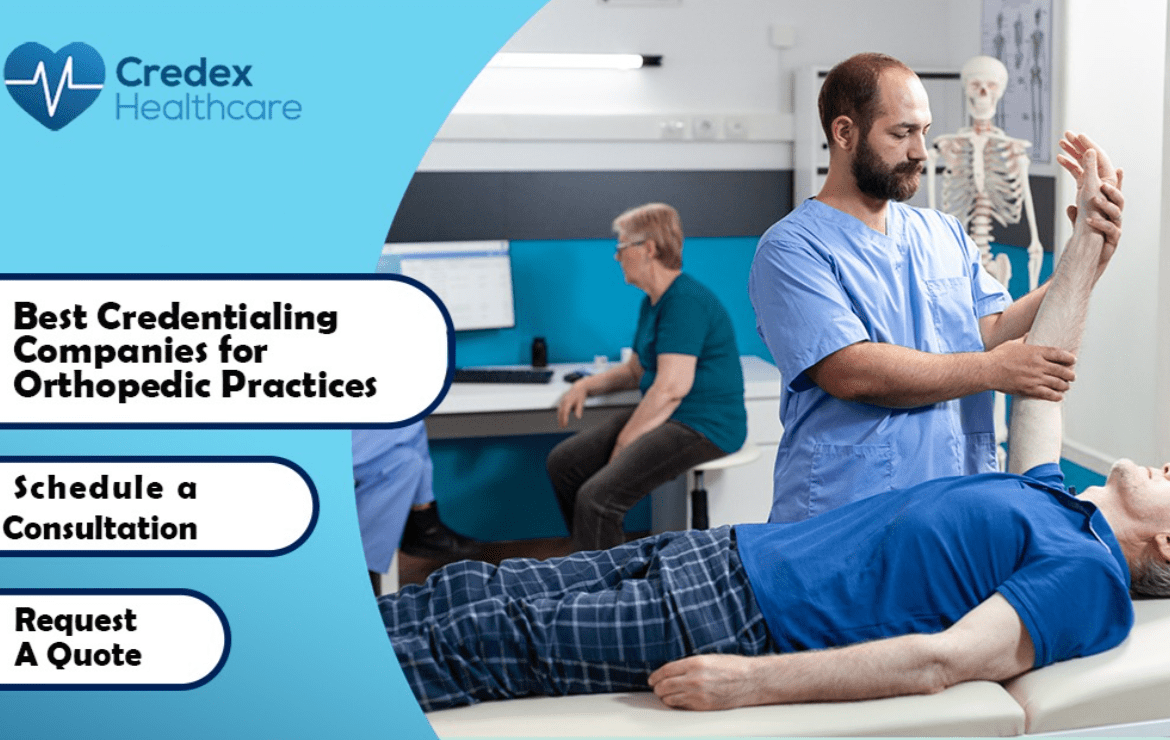
Since credentialing is the most important part of starting and running a healthcare practice, getting an expert to do it is also critical. The list of the best credentialing companies for orthopedic practices in the United States will help you find the right credentialing partner to make your orthopedic practice’s revenue cycle better. Orthopedic doctors face problems that general practitioners don’t usually have when they use orthopedic credentialing services. They need to check surgical permits, handle imaging approvals, deal with difficult payer rules, and understand that laws.
If you are an orthopedic surgeon working alone, as part of a multi-specialty group, or running a sports medicine clinic, specialized orthopedic medical credentialing support is necessary to maintain cash flow and avoid claims denials.
Orthopedic Practices Need Specialized Credentialing Services
Orthopedic credentialing needs specialized expertise and a customized plan due to the following complexities.
Orthopedic-Specific Payer Rules
Some insurance companies ask for additional documentation for spine surgeons versus joint replacement specialists. Others have separate panels for orthopedic practices. Without a good understanding of these details, applications get denials and delays.
Surgical Pre-Authorization Requirements
It gets even more complicated with the need for surgical pre-authorization. Many procedures, like complete knee replacements, spinal fusions, and arthroscopic repairs, require prior authorization before surgery.
Complex Documentation
In orthopedics, payers want to see proof of surgical training, board certifications, malpractice history, hospital privileges, and often specialty-specific credentials from organizations like the American Academy of Orthopaedic Surgeons (AAOS).
Facility vs. Professional Credentialing
It is a dual task to do facility and professional credentialing at the same time. Most orthopedic providers work in both hospitals and outpatient surgery centers. Each place needs its own credentials, and handling both at the same time takes careful planning.
Therefore, working with credentialing companies for orthopedic surgeons who know these challenges prevents revenue delays that can stretch for months.
Best Credentialing Companies for Orthopedic Practices
There are many credentialing companies in the US; however, the following are the best credentialing companies for orthopedic practices.
Credex Healthcare

With a proven track record, Credex Healthcare leads the industry in orthopedic practice credentialing. They have a dedicated team of experts in orthopedic practices credentialing who know the unique needs of spine surgeons, joint replacement experts, and sports medicine doctors.
Credex helps with all parts of credentialing. They help with things like enrolling new orthopedic providers and setting up and maintaining CAQH ProView profiles. They also help providers enroll in Medicare and Medicaid through PECOS, enroll commercial payers with big insurance companies like Aetna, BCBS, UHC, Cigna, and Humana. They have special expertise in facility credentialing for hospitals and ASCs, managing recredentialing, and giving ongoing prior authorization support for orthopedic cases.
Credentialing experts know how to properly enroll a trauma surgeon as opposed to a juvenile orthopedist. Their team keeps in touch with payer officials directly, which speeds up decisions and fixes problems that would otherwise delay applications for weeks.
Their unique tracking system lets you see in real time where each application is. You won’t have to wait for approvals anymore; You will know the exact approval status. They update the CAQH changes every three months, so your accounts are always in line.
There are custom prices based on the size and needs of the practice, and there are no secret fees. Most orthopedic practices experience faster reimbursement because credentialing delays are minimized.
MaxRemind

MaxRemind has a great name in credentialing with a growing focus on surgical specialties, including orthopedics. They perform primary source verification, provider enrollment, recredentialing, orthopedic NPI and taxonomy setup, and NPPES Registry membership. Their method keeps a database of payer-specific requirements updated and lowers application mistakes. Their turnaround time is 90-120 days for commercial payers.
SpryPT

SpryPT offers credentialing services for physical therapy practices; however, they also work with orthopedic providers who work closely with rehabilitation services. They provide CAQH enrollment, Medicare and Medicaid orthopedics, and workers’ compensation payers, as well as private insurance credentialing. This is especially helpful for orthopedic offices that treat injured patients. The turnaround time is 90–120 days with fair pricing for multi-provider services.
MHS (Medical Healthcare Solutions)

MHS has been managing healthcare for decades, and its team knows a lot about complicated surgical fields. They handle all required steps for orthopedic surgeon registration, including original applications, recredentialing, privilege granting, and payer contracting. Their customized service with account managers devoted to each client is the best in orthopedic group practice credentialing. The turnaround time is 80 to 110 days for premium prices.
Med USA

Med USA serves specialty practices with orthopedics as a core focus. They do main source verification through the NPPES Registry and offer credentialing, registration, CAQH ProView management, and thorough tracking records. Their strong relationship with CMS (Centers for Medicare & Medicaid Services) staff members helps them quickly fix problems with Medicare registration.
BillingParadise

BillingParadise includes credentialing in its full range of revenue cycle management services. They handle initial credentials, recredentialing, orthopedic patient registration deadlines, privilege coordination, and combined billing services. There are fewer claim rejections because of the link between credentialing and reimbursement. The turnaround time is between 90 and 130 days, and there are price choices for bundles.
PGM Billing

With more credentialing services, PGM Billing focuses on surgery specialty billing. They help with getting and renewing credentials, enrolling payers (including Medicare PECOS reports), granting hospital privileges, and keeping profiles up to date. They know which payment requirements directly affect reimbursement because of their experience with surgery bills. The turnaround time is 85 to 115 days, and customers who order a lot will get lower prices.
Plutus Health

Plutus Health uses technology to solve problems with software that makes the process clearer. They offer complete credentialing, including enrollment, verification, CAQH management, payment follow-up, and a client site for real-time tracking. Their technology appeals to practices wanting data transparency. The turnaround time is 90 to 120 days with automatic alerts and a price in the middle to upper range.
RCM MBW
MBW RCM’s only focus is on revenue cycle management, which is an important part of credentialing. They give new provider licensing, which means that doctors have to prove their qualifications every two years; they also perform enrollment with both private and government programs, facility credentials, and support for integrated billing. The turnaround time is 90 to 120 days, and there are different ways to pay.
Transcure
Transcure provides full medical credentialing services, and surgery experts have good reviews about them. They provide primary source verification, enrollment with all major payers, and application for Medicare and Medicaid. They also set up and maintain CAQH, keep an eye on credentials, and manage recredentialing. They maintain active communication and provide weekly status updates. Their turnaround time is 90 to 125 days with clear prices.
Key Credentialing Challenges for Orthopedic Providers
Even if they get professional help, orthopedic doctors should know about the usual problems that can make getting credentials take longer:
CAQH Maintenance
CAQH upkeep needs attestations every three months. Missing these deadlines can suspend your credentialing status with multiple payers simultaneously. Orthopedic surgeons must realize that most insurance companies use CAQH as the data source, and if it lapses, everything freezes.
Enrollment With Medicare, Medicaid, Workers’ Comp
Joining Medicare, Medicaid, and Workers’ Compensation all require different forms to different organizations. Medicare runs through PECOS, Medicaid varies by state, and workers’ comp requires enrollment with individual networks.
High-Volume Prior-Auth Workflows
Setting up high-volume prior authorization needs to be done during credentialing. If you do spine fusions, joint replacements, or other treatments that always need prior authorization, your credentialing company should set up your provider profile from the start so that these requests are processed quickly.
Maintaining OR Facility Credentials
Orthopedic doctors who do surgeries at more than one hospital or outpatient surgery center need to keep their credentials up to date at each place. Your credentialing company needs to organize your provider profile to streamline these requests from the start date.
Multi-Location Enrollment
Orthopedic groups with satellite offices or doctors who split their time between locations have a harder time when they have to enroll at more than one place. Some payers may require each practice site to sign up separately, and to keep everything in line, careful tracking is necessary.
Choose the Best Orthopedic Credentialing Company
Orthopedics is not equally understood by all credentialing services. Here’s what you should look for:
Look for Ortho-specific Knowledge
Question possible credentialing partners about the number of orthopedic practices they serve. Request references from spine surgeons or sports medicine doctors.
Check Payer Relations
The best credentialing companies keep in touch with the payer credentialing department. This access speeds up decisions and helps solve problems that would normally need weeks of back-and-forth.
Turnaround Time
The industry standard is 90-120 days for most commercial payers and 60-90 days for Medicare. Services that constantly exceed these standards show that they are efficient and have good relationships with their payers.
Assess Reporting and Follow-Up
You should receive regular updates without having to ask. Weekly progress updates, instant tips about problems that need your attention, and a clear schedule for each payer are signs of professional management.
Consider Integrated Services
If you are also looking at billing companies, look for ones that do billing and credentialing. The integration eliminates common problems that lead to reduced claim rejections.
Understand Their Pricing
Some services charge per provider, others use monthly fees, and some work on a percentage of collections. Make sure you know exactly what’s included and if there are extra fees for faster handling or fixing problems.
Verify Their Technology
Check out their technology. Online tools that let you see real-time application status, share papers safely, and see when your credentials expire are very helpful. Before you partner, ask for a demo.
Conclusion
Every month, orthopedic offices lose thousands of dollars in income because of delays in credentialing. The process of Medicare registration, commercial payer applications, facility credentialing, and ongoing upkeep is not easy, but working with specialized orthopedic credentialing companies turns this painful bottleneck into a smooth entry process.
Credex Healthcare is one of the companies that leads the field by combining orthopedic expertise with technology and payer relationships that deliver faster approvals. Whether you choose them or another expert, make sure your credentialing partner knows exactly what challenges orthopedic providers deal with.
The right credentialing services do not only fill out forms. They become a strategic partner in your practice’s revenue cycle, preventing denials and accelerating approvals. This lets you focus on helping patients.
FAQs
How long does orthopedic credentialing take?
It usually takes 90 to 120 days for commercial payers and 60 to 90 days for Medicare to credential orthopedic providers, but specialized credentialing companies often finish the process more quickly because they have good relations with the payers.
Which payers require separate orthopedic enrollment?
Aetna, BCBS, UHC, Cigna, and Humana are all big commercial companies that require their own registration forms. You have to join PECOS to get Medicare. For Medicaid, each state has its own rules for individual applicants.
Do orthopedic surgeons need recredentialing every 2 years?
Most payers require recredentialing every 24 to 36 months, but the length of the cycle depends on the payer. Most of the time, hospital privilege are renewed every two years. On the other hand, CAQH needs to confirm that accounts are up to date every three months.
Can credentialing companies manage facility credentials?
Yes, a lot of credentialing services, such as Credex Healthcare, take care of credentials for both payers and facilities. This includes handling hospital medical staff applications and credentials for outpatient surgery centers.
Related posts



Popular Posts

Best Credentialing Companies for Pathology

Best Credentialing Companies for Orthopedic Practices

Hidden Costs You Should Know Before Hiring a Billing Company
Testimonials
As a Homecare agency, navigating credentialing and enrollment can be a headache, but Credex Healthcare made it simple and straightforward. They took care of everything from our NPI management to PECOS enrollment, ensuring compliance at every step. Their expertise in primary source verification and network research helped us expand our network, allowing us to provide care to more patients. Highly recommend!

Homecare Agency Owner
Credex Healthcare has been an invaluable partner for our multi-specialty group practice. They handled all our credentialing and enrollment needs, ensuring every provider was up-to-date across insurance networks and credentialing portals like CAQH and PECOS. Their ability to track and manage multiple providers’ licenses and certifications has saved us a tremendous amount of time and reduced our administrative burden.

Pediatric Group
Running a lab comes with its own set of compliance challenges, but Credex Healthcare has taken care of it all. They managed our CLIA waiver, credentialing, and enrollment processes, ensuring that we met every regulatory requirement. Their attention to detail and ability to handle complex credentialing issues has allowed us to focus on our operations without worrying about missing deadlines or facing compliance issues. Exceptional service!

Lab Director
Credex Healthcare has been a game-changer for our HomeHealth agency. They managed our credentialing process from start to finish, ensuring all our licenses, DEA registrations, and CAQH profiles were up to date. Their expiration tracking system is incredibly helpful in keeping everything in check. Thanks to them, we can focus on delivering quality care to our patients without worrying about administrative hurdles.

HomeHealth agency Owner
Credex Healthcare has been amazing to work with. As a Nurse Practitioner, they took care of everything, from managing my NPI and PECOS enrollment to handling all my licensing and revalidation requirements. Their support has allowed me to concentrate fully on patient care, and their thorough primary source verification ensured that my credentials were always accurate and up to date. I couldn’t ask for a better partner!

Nurse Practitioner (NP)
I’ve had an outstanding experience with Credex Healthcare. They took over my credentialing, managed my CAQH profile, and handled my DEA registration with ease. Their team made sure my practice stayed compliant and helped me with network research and application follow-up. I don’t know what I would do without them handling all the administrative tasks!